
News and Articles
06/10/2026
County composting program reduces greenhouse gases bucket by bucket
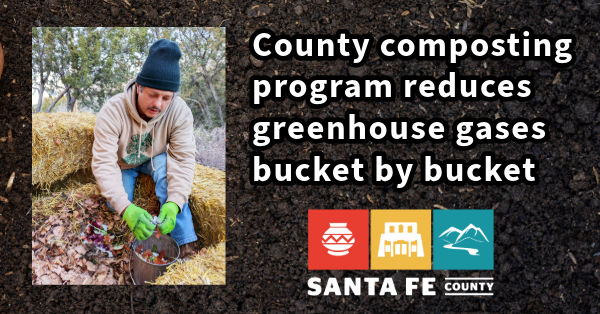
SANTA FE, N.M., June 10, 2026—Santa Fe County’s backyard composting program wrapped up its spring cohort with plenty of interest from residents, and tips for anyone wishing to start their own compost system.
The program began in 2018, but participation increased in 2025, thanks to more coverage and a revamped application process. There were so many applicants for the fall that a second cohort was added this spring. Participants received a free compost installation system, a small bin for kitchen scraps, a pitchfork to turn and manage the compost pile, red wiggler worms, and in-person training.
“I'm very happy with my new composting system and I love feeding the worms! It was one of my gardening goals this season to start composting at home, so this program was a perfect fit for me. I would highly recommend it to anyone interested in composting,” said Kate Finio, a spring 2026 participant.
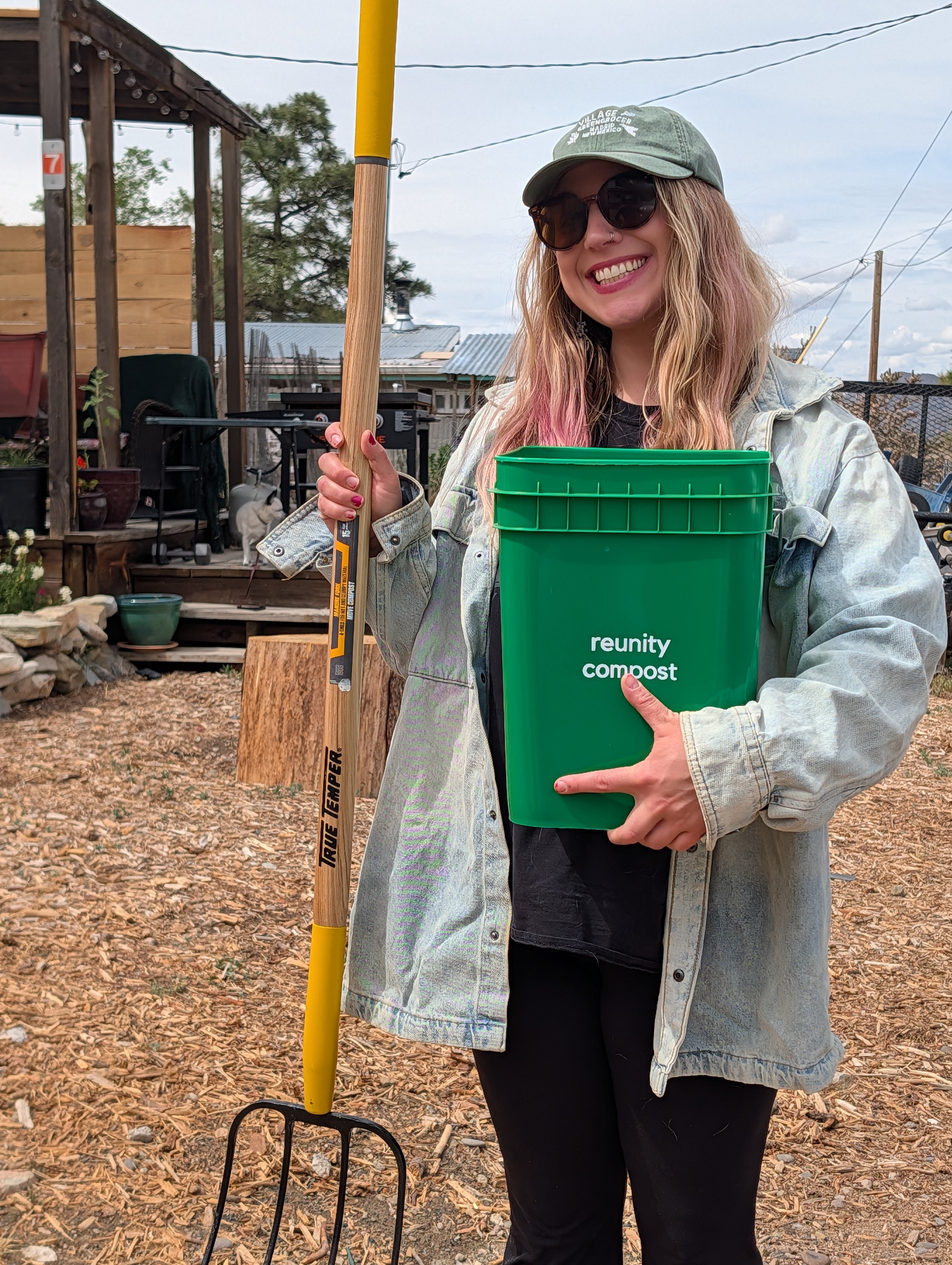
Photo: Kate Finio shows off two important tools for composting—a kitchen bucket to collect scraps and a pitchfork to turn and aerate the compost pile.
The County Sustainability Division initiated the program to divert organic material from the landfill and to encourage achievable, sustainable practices by County residents. Composting kitchen scraps that would otherwise go to the landfill makes a local impact on greenhouse gas emissions.
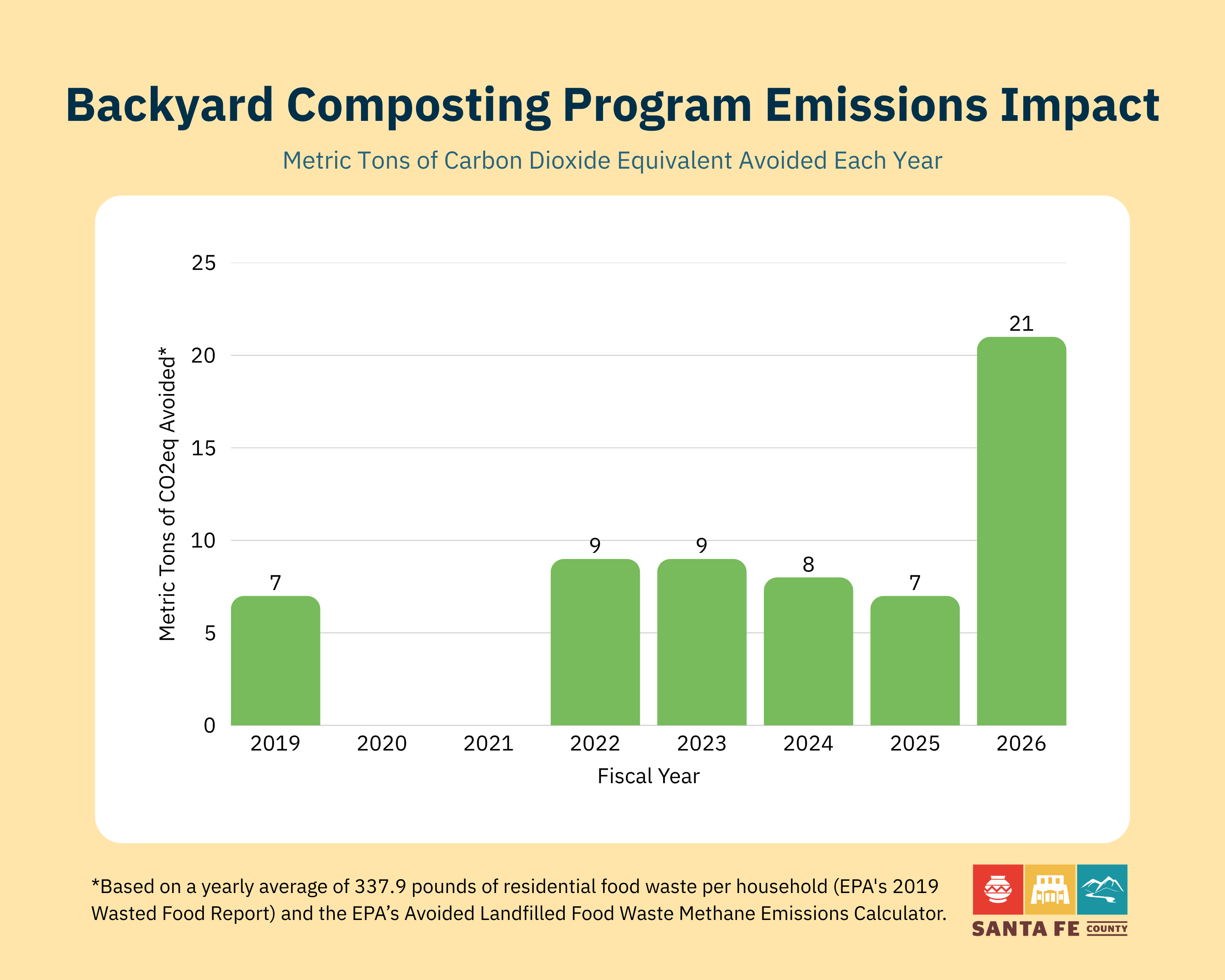
Graphic: This graph shows the metric tons of carbon dioxide equivalent that have been avoided thanks to the Backyard Composting Program. Carbon dioxide equivalent is the standard unit that the EPA uses to measure combined greenhouse gases. To date, 61 metric tons of carbon dioxide equivalent have been avoided with this program. To use a more familiar analogy, that is equal to the same emissions from 5,852 gallons of gasoline, according to the EPA greenhouse gas equivalency calculator. *Please note, this graph has been updated to more accurately align with the fiscal year rather than the calendar year.
With 289 participants to date, the program has reduced greenhouse gas emissions by an estimated 61 metric tons, based on Environmental Protection Agency (EPA) emissions calculator. That's equivalent to the emissions from 5,852 gallons of gasoline, according to the EPA gas equivalency calculator.
That’s because food scraps make up to a third of landfill waste and cause more than half of greenhouse gas emissions released from landfills, according to the EPA. When food scraps are buried under masses of landfill waste, it causes an anaerobic decomposition process that produces greenhouse gases. An excess of greenhouse gases, like carbon dioxide, traps heat in the Earth’s atmosphere, leading to altered climate and weather patterns at global and regional scales. Home composting allows food scraps and lawn trimmings to continue in a regenerative cycle, which produces a rich soil amendment instead.
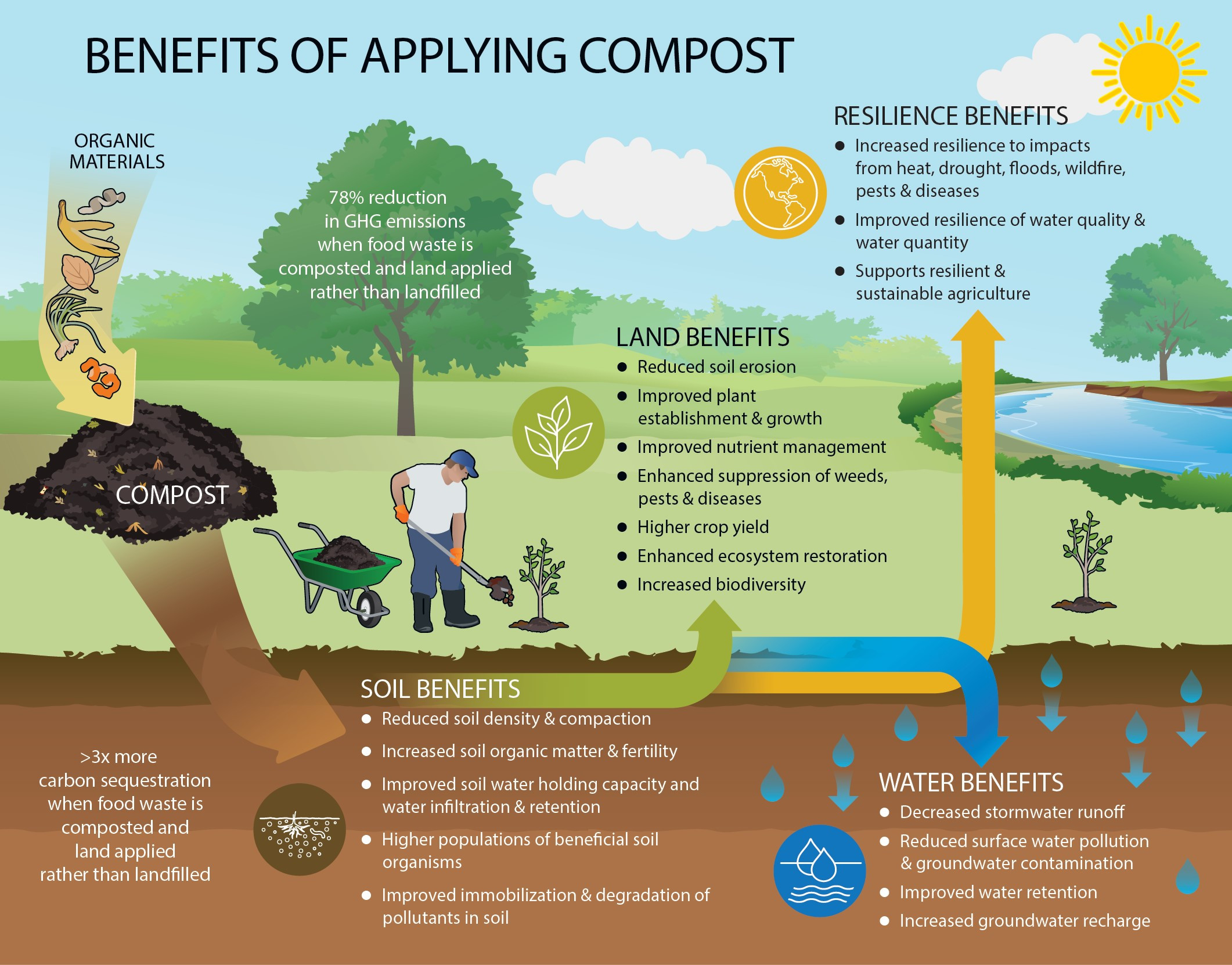
Graphic: EPA graphic on the value of applying compost. Visit the EPA website for full text.
In 2025, the program won “Diversion Project of the Year,” an award from New Mexico Recycling Coalition, recognizing the County’s improvements to solid waste, recycling and compost operations.
“We have been super happy with the program. My worm composting bin is going great, and now I hardly ever throw away food waste. I am so thankful that the County is working to divert waste,” said participant Ellen Knodel.
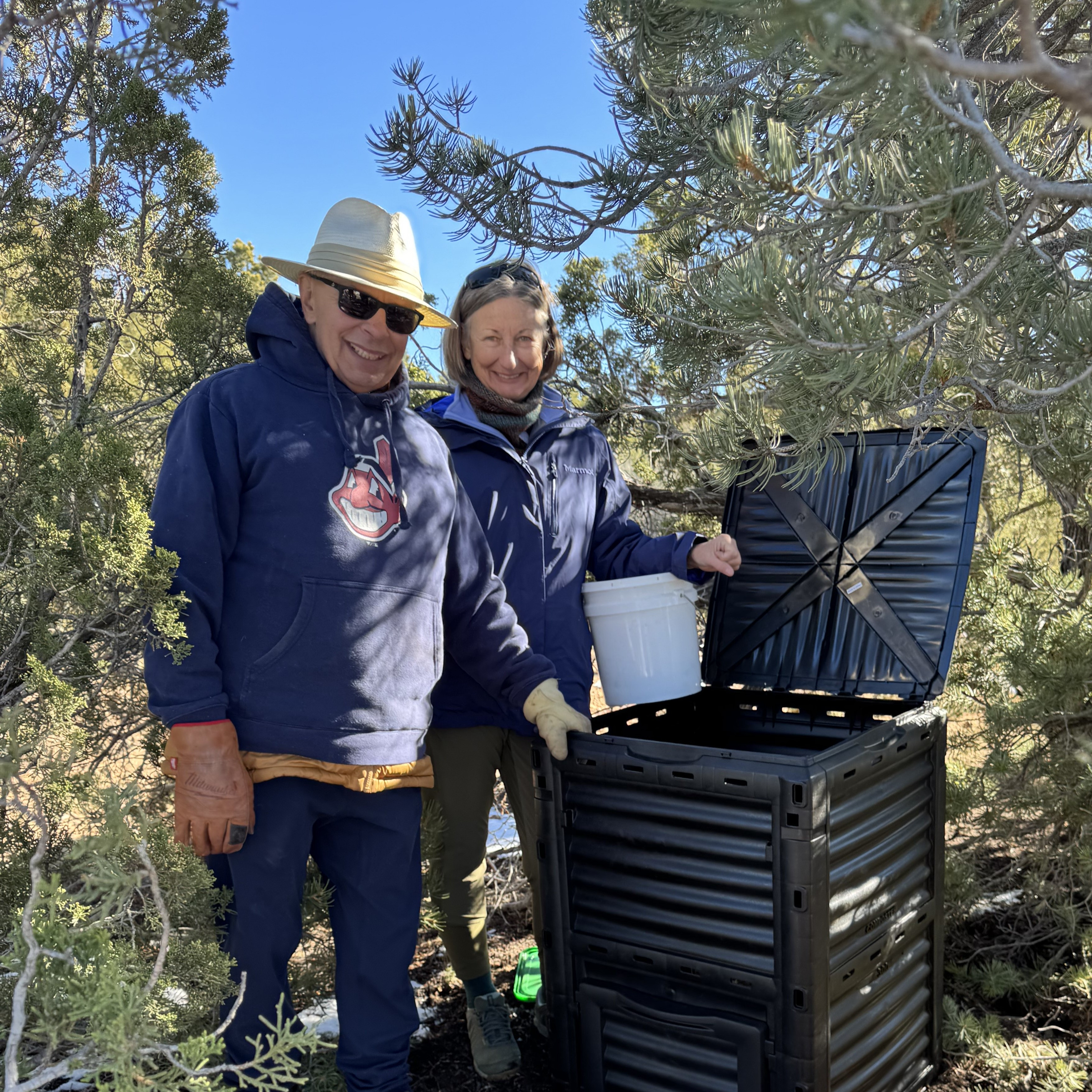
Photo: Knodel and Tom Di Zinno, fall 2025 participants, pose with their composting bin and kitchen scraps bucket.
There are lots of options for residents to compost their food scraps, and the County hosts a webpage with resources to get you started. There’s information about how to build and manage your own compost pile or worm bin, and how to participate at community composting sites if composting at home is not an option. Additionally, there’s a pick-up service available in the Santa Fe area for a fee.
For more information about Santa Fe County Sustainability initiatives, contact Sustainability@SantaFeCountyNM.gov.
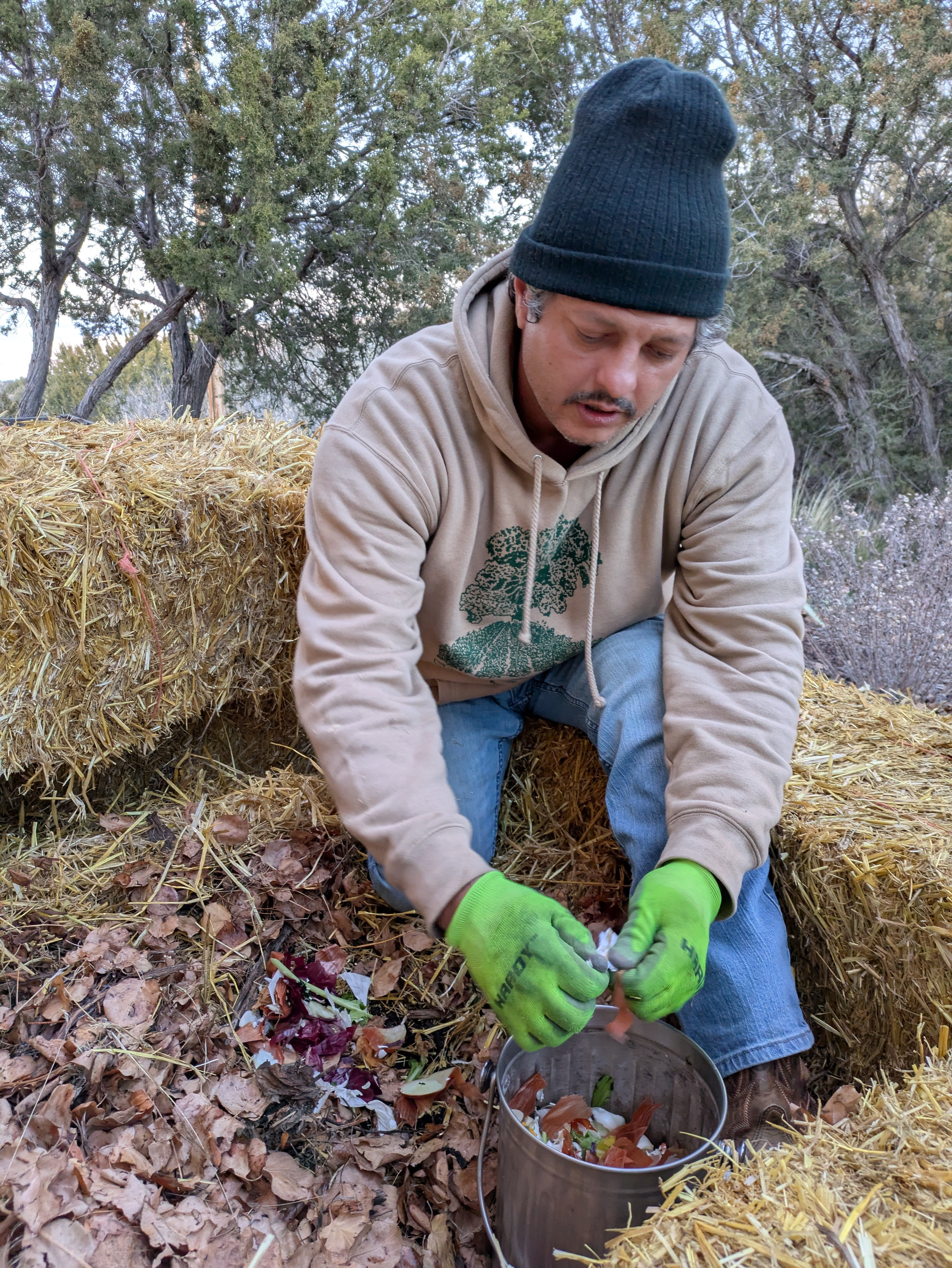
Photo: Santa Fe County partnered with Reunity Resources to install the compost systems and provide training. Reunity Resources staff member Mihai Tomozei shows how to add food scraps to a strawbale compost set up.
####